


Laboratory tests help to most accurately show the presence of parasites in the human body.Most often, blood and stool samples are needed to test for worms.
Each of the modern methods has its advantages and disadvantages.For this reason, doctors recommend conducting a comprehensive examination of the body to determine whether a person has worms.
A stool test for parasites will show the presence of helminth larvae and eggs.However, test results do not always allow for an accurate diagnosis.
This fact is explained by the fact that worms have several specific developmental stages;they can live and parasitize in different parts of the digestive tract.To get the most accurate result, it is necessary to donate stool at least 3 times a week.
If the examination of blood samples is indicated, antibodies that appear as a result of the human body's reaction to the toxins secreted by the worms will be detected.Due to the fact that around 150 types of parasites live in the human body today, no research method can be 100% accurate.
Are there worms or not?
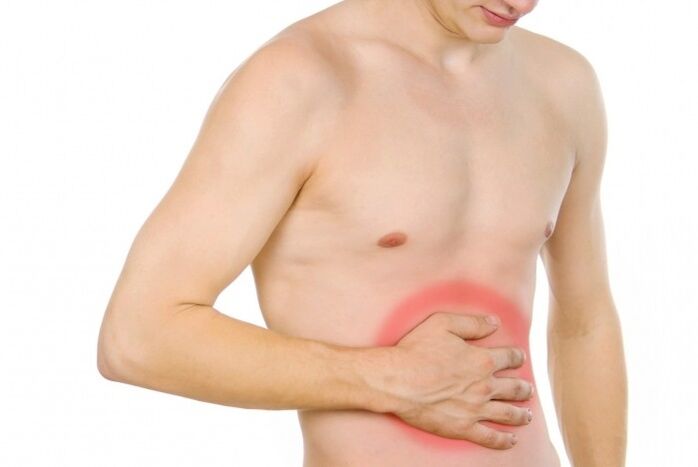
Everyone knows that the main indicators on the basis of which the presence of parasites is suspected are:
- excessive thinness of a person against the background of increased appetite;
- abdominal pain after eating;
- attacks of morning sickness.
Such symptoms will allow you to simply suspect that you have worms at home, but an accurate diagnosis can be made after undergoing body diagnostics and taking tests for parasites.These signs may indicate pathologies of the digestive tract, metabolic disorders and other diseases.
If you have worms, the symptoms will be as follows: flatulence, periodic discomfort in the abdominal cavity, stool disorder (diarrhea, constipation), after eating you may feel heaviness in the stomach, there may be worms in the stomach.
Many people, after discovering signs of parasitic infestation, immediately start taking all kinds of drugs and switch to a bland diet.In the vast majority of cases, such measures will be useless, sometimes even harmful.Before starting treatment, you must be tested for worms, especially if the following symptoms have occurred:
- discomfort near the anus;
- reduced immunity, frequent colds;
- skin rash (urticaria), inflammation (ulcers);
- constant cough, does not go away even after treatment.
Parasites can negatively affect the functioning of the central nervous system.This is evidenced by signs: excessive nervousness, irritability, fatigue.
When to donate blood
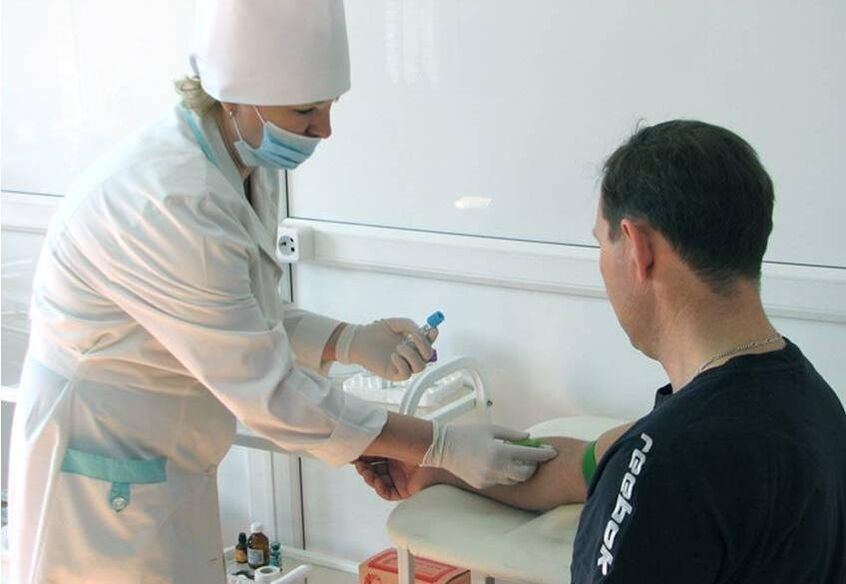
Blood analysis for the presence of worms is done if a person suffers from headaches, skin problems, itching around the anus, insomnia, digestive disorders (diarrhea, mucus in the stool, constipation).With a parasitic infestation, the patient will notice excessive nail brittleness and hair loss.
If the child is sick, the symptoms may appear differently.In addition to these signs, strong salivation, increased appetite, and lack of concentration also occur.
Therefore, blood analysis for the presence of worm antigens is an important diagnostic measure that will detect parasites in the body and determine the disease as soon as possible.There is an opinion that only stool samples are enough to establish a diagnosis, but this is not so.Blood tests are rarely done because patients do not want to waste time and money.
Not everyone knows that eggs in feces can only be detected if they are worms
- filled the bowels;
- they are actively developing;
- multiply.
A blood test for worms in adults will show infestation at a very early stage.To perform such an analysis, you should take blood from the cubital vein, which will allow you to accurately and quickly determine the type of parasites and choose ways to get rid of them.
Blood sampling is also necessary if there is a suspicion of worm infection, when helminths are detected in domestic animals, for the implementation of epidemiological diagnostic measures in a certain area.It is necessary to check whether a person has worms if the level of leukocytes in the blood is elevated, which does not indicate other pathological conditions.
Sometimes routine examinations are carried out for persons whose professional activities are closely related to an increased risk of parasitic infection;as a rule, this group includes:
- workers in meat processing factories;
- farmers;
- veterinarians.
Determination of the presence of antibodies against parasites is necessary for fibroids, an inflammatory process in the adrenal glands, bladder and kidneys in women.Men are advised to do blood tests for prostatitis, adenoma and impotence.
A proven sign that worms may exist in the body is indigestion.In this case, blood testing is carried out for both men and women.
Stool analysis
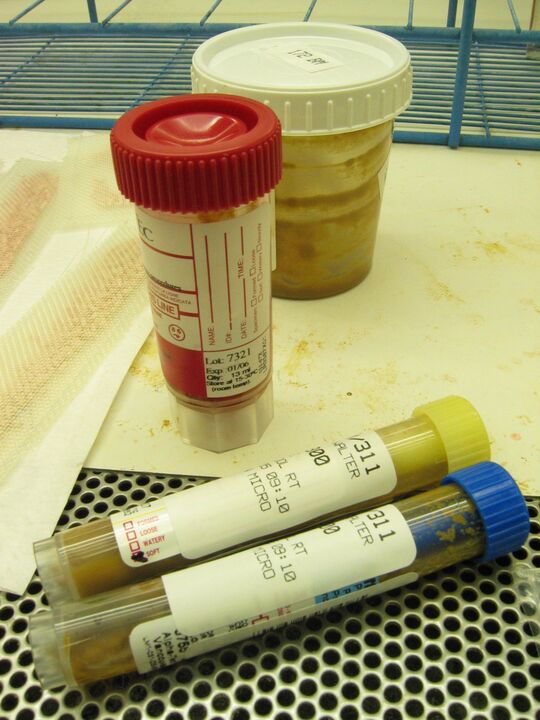
In order to get an accurate result, the patient must follow clear rules.Therefore, one week before the analysis, you need to stop taking antiparasitic, antidiarrheal and antibacterial drugs, castor and mineral oil.
When a colon examination (irigoscopy) is not scheduled, blood donation is allowed no later than 2 weeks after stool analysis.It should be known that the container with the material must not be stored at temperatures above zero.Optimal is 4-8 degrees for no longer than 8 hours.
Examination of stool for protozoan parasites is carried out as follows:
- take 2 teaspoons of feces;
- transfer to a clean, dry container;
- cover with a lid.
Ideally, you need to take material from different parts of the chair.In order to get an accurate answer, feces are collected no later than half an hour after defecation, and the jar is immediately delivered to the laboratory.
It is important to draw the attention of patients that one test for the identification of worms in humans is not always sufficient, especially for pinworm and roundworm eggs.Accordingly, the analysis is repeated at least 3 times with a frequency of 1-2 days.
How to submit scraping
Before checking the presence of worms using scraping, you need to familiarize yourself with the basic rules of the procedure.First of all, it is forbidden to wash the area around the anus, as this will destroy traces of parasites.To get the most accurate result, it is equally important not to empty the bowels before taking the scraping.
Worm scrapings are taken in a laboratory or clinic, but worms can also be detected at home.Before taking the sample, it is recommended to wear medical gloves.
If there is an assumption about the development of enterobiasis, it is better to use a special test tube with a long rod inside.You will need to wrap the end of this stick with cotton wool and then carefully soak:
- glycerin;
- distilled water;
- physiological solution.
The procedure is quite simple and does not require much effort.The container is opened, a cotton swab is taken, the buttocks are separated, and then the rod is passed around the anus.
The stick with the obtained biological material is returned to the container, trying not to touch its walls, and the container is closed.
The result of the study will be reliable if the sample of biological material is delivered to the laboratory as soon as possible.
You can determine the presence of parasites in you in another way, for example, using a glass slide with a special adhesive tape.
Doctors insist that the analysis technology must be performed correctly.So, first you need to peel off the sticker from the glasses, apply it to the skin around the anus for a few seconds, spreading the bottom before doing so.after which:
- the tape is reattached to the glass;
- the material is taken to a health facility where the research will be carried out.
There is another equally important rule: when collecting biological material, it is forbidden to touch the tape and glass with foreign objects.Also, you should not store the analysis in the refrigerator, as this will greatly affect the result and reliability of the study.
Today, it is possible to test for the presence of a parasitic infection by providing a saliva sample.The test is simple and does not require any prior preparation of the patient.They take a disposable container and special reagents that allow you to identify the 11 most common types of helminths.
The method has advantages and obvious disadvantages, for example, the test is supported by the ability to detect the presence of worms in all tissues of the body, and the negative side of the procedure is the rather high cost of the study.